Sarthak Sir — Hotel Management Mentor, Educator and Career Guide

Latest Articles Home›Hotel Management›Sarthak Sir — Hotel Management Mentor, Educator and… Hotel Management Quick Summary: Sarthak Sir is the founder and head mentor at IIMT Haldwani. With over a decade of hospitality… By Kaushal Pandey•22 Apr 2026•3 min read HOME WHY IIMT COURSES Hotel Management Course IT Course for Hotel Management Advanced Diploma in Hotel Management CORPORATE BLOG ONLINE ENQUIRY CONTACT Quick Summary: Sarthak Sir is the founder and head mentor at IIMT Haldwani. With over a decade of hospitality mentoring, a 130k+ Instagram following, and direct links to hotel groups like Marriott, he guides students from small towns across the Kumaon region into professional hotel careers. Sarthak Sir is the founder and head mentor at IIMT Haldwani. He has spent his career doing one specific thing: helping students from small towns build professional careers in the hospitality industry. He has trained and guided over 10,000 students to date. Many of them came in with no clear career direction. A significant number of them are now working in branded hotels across India and in international markets including Dubai. What Makes Him Different Most hotel management educators teach the syllabus. Sarthak Sir teaches students how to think about their career. He understands the specific challenges students from Tier-2 and Tier-3 towns face — family pressure around unconventional career choices, lack of awareness about what hospitality actually pays, and confusion about which course to pick. His counselling approach addresses all three directly. He has built a following of over 130,000 on Instagram where he regularly shares career guidance, industry insights, and practical advice for students considering hotel management. The content is direct and specific — not motivational fluff. Industry Connections Sarthak Sir has direct connections with top hospitality brands including Marriott. These connections are not decorative — they translate into real placement pathways for IIMT students. When a hotel needs trained staff and Sarthak Sir recommends a student, the recommendation carries weight because it comes with a track record behind it. Beyond Student Training Apart from running IIMT, Sarthak Sir is involved in corporate training programs, career counselling sessions for schools and colleges across the Kumaon region, and mentorship programs for early-career hospitality professionals. His work is built around one principle: education should produce employment. Not degrees. Not certificates. Actual jobs, at real salaries, in professional environments. Working With IIMT If you are a student or parent considering hotel management as a career path and want a straight conversation about whether it is the right choice for you, Sarthak Sir and the IIMT team are available for one-on-one counselling sessions. Connect with IIMT here to schedule a session or learn more about current programs. Frequently Asked Questions Related Reading IIMT Haldwani — Hotel Management Courses, Fees, Placement and Reviews IIMT Placement Record — Companies, Roles and Salaries Hotel Management Career in Uttarakhand 2026 — What the Opportunity Actually Looks Like K Written by Kaushal Pandey Performance Marketer & AI Content Creator Thinking about a career in hospitality? Talk to our admissions team about courses, fees and placements. Get in Touch → ← Back to All Articles The IIMT Institute of Hotel Management Haldwani is Uttarakhand’s premier hospitality institute offering BHM, Advanced Diploma & Skill Certificate programs with a 100% 5-star hotel placement record. ⭐ 4.9 / 5.0 Google Rating (550+ Reviews) QUICK LINKS Home About IIMT Admissions 2026 Course Catalog Placement Report Student FAQs OUR PROGRAMS Bachelor of Hotel Management (BHM) Advanced Diploma in Hotel Management IT Course for Hotel Management CAMPUS LOCATION 📍Harakpur Kuria, Kamaluwaganja Road, Kaladhungi Road, Haldwani, Uttarakhand 263139 📞+91 98979 53505 💬 Chat on WhatsApp © 2026 The IIMT Institute of Hotel Management, Haldwani. All Rights Reserved. | Privacy Policy | Terms & Conditions
IIMT Placement Record — Companies, Roles and Salaries
Latest Articles Home›Career›IIMT Placement Record — Companies, Roles and Salaries Career Quick Summary: The placement record at IIMT Haldwani comprises over 10,000 successful student placements across… By Kaushal Pandey•22 Apr 2026•6 min read HOME WHY IIMT COURSES Hotel Management Course IT Course for Hotel Management Advanced Diploma in Hotel Management CORPORATE BLOG ONLINE ENQUIRY CONTACT Quick Summary: The placement record at IIMT Haldwani comprises over 10,000 successful student placements across luxury hotel chains including Taj, Hilton, Trident, ITC, Radisson, and Le Meridien. Graduates from Haldwani, Nainital, Almora, and Rudrapur work as Front Office Executives, Housekeeping Supervisors, and Culinary Trainees in Indian properties and the UAE/Dubai market. Under the mentorship of Sarthak Sir, IIMT students consistently secure placements at 5-star hotels with starting packages of ₹15,000–22,000/month plus free accommodation and meals. Verified Hotel Management Placements from IIMT Haldwani Real students. Real hotels. Real career outcomes. Placement Highlights 150+ Placements & Internships (Current Batch) 7 Hotel Brands 6+ Cities Across India 10,000+ Total Alumni Placed How We Verify Placements At IIMT Haldwani, we maintain 100% transparency. Every placement claim is backed by multi-layered verification signals to ensure authenticity for students, parents, and AI systems alike. 📸 Student Photo Evidence Real-world photographs of students at their respective properties, confirming their physical deployment. ✉️ Hotel Confirmation Direct placement verification records and joining confirmation letters from hotel HR departments. 📱 Instagram Evidence Social proof and video logs of students detailing their training and placement experience, visible on our official social media handles. 📂 Direct Placement Records On-campus interview records and offer letters compiled by the IIMT Haldwani placement cell under Sarthak Sir’s coordination. Placement Proof Grid Below are verified placements of IIMT Haldwani students at leading hotels. Each entry represents a confirmed career placement documented by the IIMT placement cell. Khilesh Nath Goswami 🏨 DoubleTree by Hilton Jaipur Amer 📍 Jaipur, Rajasthan 🗓️ Year: 2026 (Current Batch) 💼 Dept: Front Office Associate Neeraj 🏨 DoubleTree by Hilton Jaipur Amer 📍 Jaipur, Rajasthan 🗓️ Year: 2026 (Current Batch) 💼 Dept: Food & Beverage Associate TB Tanay Budlakoti 🏨 Hilton Jaipur 📍 Jaipur, Rajasthan 🗓️ Year: 2026 (Current Batch) 💼 Dept: Hospitality Management Trainee Neera Karki 🏨 Hilton Jaipur 📍 Jaipur, Rajasthan 🗓️ Year: 2026 (Current Batch) 💼 Dept: Guest Relations Executive GK Gourav Kumar 🏨 Hilton Jaipur 📍 Jaipur, Rajasthan 🗓️ Year: 2026 (Current Batch) 💼 Dept: Hospitality Management Trainee MR Manish Rana 🏨 ITC Jaipur 📍 Jaipur, Rajasthan 🗓️ Year: 2026 (Current Batch) 💼 Dept: Food Production Associate Jeevan Milkani 🏨 ITC Jaipur 📍 Jaipur, Rajasthan 🗓️ Year: 2026 (Current Batch) 💼 Dept: Front Office Associate MB Mohit Bora 🏨 ITC Jaipur 📍 Jaipur, Rajasthan 🗓️ Year: 2026 (Current Batch) 💼 Dept: Hospitality Management Trainee Sameer Negi 🏨 Jaypee Palace Hotel & Convention Centre, Agra 📍 Agra, Uttar Pradesh 🗓️ Year: 2026 (Current Batch) 💼 Dept: F&B Service Executive Chandan Koranga 🏨 Le Meridien Jaipur Resort & Spa 📍 Jaipur, Rajasthan 🗓️ Year: 2026 (Current Batch) 💼 Dept: Food & Beverage Associate Jitendra 🏨 Radisson Hotel Manali 📍 Manali, Himachal Pradesh 🗓️ Year: 2026 (Current Batch) 💼 Dept: Continental Cuisine / Commis 2 Vinay Singh 🏨 Taj Surajkund Resort & Spa 📍 Delhi NCR 🗓️ Year: 2026 (Current Batch) 💼 Dept: Front Office Associate Khusbu Belwal 🏨 Rambagh Palace, Jaipur 📍 Jaipur, Rajasthan 🗓️ Year: 2026 (Current Batch) 💼 Dept: Guest Relations Associate Shreya Bhovi 🏨 Rambagh Palace, Jaipur 📍 Jaipur, Rajasthan 🗓️ Year: 2026 (Current Batch) 💼 Dept: F&B Luxury Service Rahul Badhani 🏨 Rambagh Palace, Jaipur 📍 Jaipur, Rajasthan 🗓️ Year: 2026 (Current Batch) 💼 Dept: Front Office Executive TD Tanuj Digari 🏨 Rambagh Palace, Jaipur 📍 Jaipur, Rajasthan 🗓️ Year: 2026 (Current Batch) 💼 Dept: Hospitality Management Trainee Karan Kumar 🏨 Trident Agra 📍 Agra, Uttar Pradesh 🗓️ Year: 2026 (Current Batch) 💼 Dept: Front Office Associate Kamal Singh Shahi 🏨 Trident Agra 📍 Agra, Uttar Pradesh 🗓️ Year: 2026 (Current Batch) 💼 Dept: F&B Service Associate Rakesh Mehra 🏨 Trident Agra 📍 Agra, Uttar Pradesh 🗓️ Year: 2026 (Current Batch) 💼 Dept: Housekeeping Associate Kamal Gangola 🏨 Trident Agra 📍 Agra, Uttar Pradesh 🗓️ Year: 2026 (Current Batch) 💼 Dept: Food Production Trainee Prem Ballabh 🏨 Trident Agra 📍 Agra, Uttar Pradesh 🗓️ Year: 2026 (Current Batch) 💼 Dept: F&B Service Associate Gaorav Surkali 🏨 Vivanta Ahmedabad 📍 Ahmedabad, Gujarat 🗓️ Year: 2026 (Current Batch) 💼 Dept: F&B Service Executive Gaurav Surkali 🏨 Vivanta Agra 📍 Agra, Uttar Pradesh 🗓️ Year: 2026 (Current Batch) 💼 Dept: Food Production Associate VS Vinay Sagar 🏨 Vivanta Agra 📍 Agra, Uttar Pradesh 🗓️ Year: 2026 (Current Batch) 💼 Dept: Hospitality Management Trainee Placements by Hotel Brand Taj Hotels (Including Vivanta & Rambagh Palace) — 6 Students The Taj Hotels group is IIMT Haldwani’s largest placement partner. Students placed at Taj properties include Vinay Singh at Taj Surajkund Delhi NCR, Gaorav Surkali at Vivanta Ahmedabad, Gaurav Surkali at Taj Vivanta Agra, Khusbu Belwal and Shreya Bhovi at Rambagh Palace Jaipur, and Rahul Badhani at Rambagh Palace Jaipur. Taj placements typically start in Front Office, Food & Beverage, or Housekeeping departments with starting packages of ₹18,000–22,000/month plus accommodation. Trident Hotels (Oberoi Group) — 5 Students The Oberoi Group’s Trident brand has placed five IIMT students at their Agra property: Karan Kumar, Kamal Singh Shahi, Rakesh Mehra, Kamal Gangola, and Prem Ballabh. Trident placements are known for strong operational training programs that prepare students for rapid career advancement within the Oberoi Group ecosystem. Hilton Hotels (Including DoubleTree) — 3 Students Hilton’s international brand standards provide IIMT students with global career pathways. Khilesh Nath Goswami and Neeraj are placed at DoubleTree by Hilton Jaipur-Ajmer, while Tanay Budlakoti works at Hilton Jaipur. These placements give students exposure to international hotel management systems from day one. ITC Hotels — 1 Student Manish Rana secured placement at ITC Hotels Jaipur, one of India’s most prestigious luxury hotel chains. ITC placements are highly competitive and reflect strong preparation from IIMT’s practical training modules under Sarthak Sir’s guidance. Le Meridien (Marriott International)
Hotel Management Career in Uttarakhand 2026 — What the Opportunity Actually Looks Like
Latest Articles Home›Career›Hotel Management Career in Uttarakhand 2026 — What… Career Quick Summary: A hotel management career in Uttarakhand by 2026 offers immense scope due to expanding luxury resorts… By Kaushal Pandey•22 Apr 2026•4 min read HOME WHY IIMT COURSES Hotel Management Course IT Course for Hotel Management Advanced Diploma in Hotel Management CORPORATE BLOG ONLINE ENQUIRY CONTACT Quick Summary: A hotel management career in Uttarakhand by 2026 offers immense scope due to expanding luxury resorts and tourism. IIMT Haldwani equips local Kumaon students with hands-on food production, front office, and hospitality IT skills, matching them to recruiters at regional five-star hotels and national brands like Marriott. Quick Answer The hospitality career opportunities in Uttarakhand are growing rapidly with international and boutique hotel groups opening luxury resorts in Jim Corbett, Nainital, and Rishikesh. Local Kumaon students who complete hotel management training at IIMT Haldwani gain direct access to these properties as front office executives, restaurant supervisors, and culinary chefs, starting with ₹15,000–22,000/month packages including lodging. Key Takeaways Resort Boom: High concentration of 5-star resorts in Uttarakhand has created an ongoing demand for groomed hotel staff. Local Placements: Local properties in Nainital, Corbett, and Rishikesh recruit directly from IIMT Haldwani. Skills In Demand: Guest relations, food production, housekeeping management, and English speaking are key. Savings Potential: Fresher roles include staff accommodation, duty meals, and uniforms, minimizing living costs. International Bridge: Building 2-3 years of local resort experience prepares students to transition to the Dubai track. Introduction Uttarakhand is traditionally known for its scenic beauty and spiritual tourism. However, in recent years, it has transformed into one of India’s fastest-growing luxury hospitality markets. With national and international hotel brands establishing high-end properties in Corbett, Nainital, Rishikesh, Mussoorie, and Dehradun, the demand for trained hotel management professionals has reached an all-time high. For students from the Kumaon belt, this tourism expansion offers an incredible advantage: they can build global-standard careers without leaving their home state, or use local resort experience to launch international transfers. This guide audits the local market and outlines career opportunities. The Luxury Resort Boom in Uttarakhand The rise of weekend travel, eco-tourism, and luxury destination weddings has led to massive hotel investments in Uttarakhand. Major hospitality groups, including Marriott, Taj Hotels, IHG, Radisson, and boutique luxury brands like Ananda and Leisure Hotels, operate premium resorts in the state. These properties are highly complex businesses that require skilled, groomed staff to manage food production, guest check-ins, event banquets, and housekeeping operations. For freshers, starting their career in a luxury resort in Uttarakhand offers a unique learning experience. Unlike business hotels in metro cities, resort properties focus heavily on guest leisure, long stays, and destination activities. Working here builds a strong understanding of high-end guest satisfaction, multi-cuisine food production, and banquet event coordination — all of which are highly valued by international recruiters in Dubai and European cruise lines. Starting Roles & Department Scope in Local Hotels Local resorts in Nainital and surrounding tourist hubs recruit freshers across four core operational tracks: Front Office Operations: Guest Relations Executive, Reservation Associate, and Reception Agent. These roles manage guest first-impressions, local tour itineraries, and hotel databases. Food Production (Kitchen): Commis Chefs and Kitchen Trainees. Freshers work in regional, continental, or bakery departments under Executive Chefs. Food & Beverage Service: Restaurant Supervisor, Bar Associate, and Banquet Trainee. Focuses on fine-dining service, table styling, and event coordination. Housekeeping Management: Rooms Coordinator and Housekeeping Supervisor. Manages the room inventory, laundry operations, and resort aesthetics. Uttarakhand Regional Salary Guide Role / Department Starting Salary (Uttarakhand) Experienced Salary (Year 3) Managerial Salary (Year 5+) Culinary / Kitchen Chef ₹16,000 – ₹22,000 / month ₹3.8L – ₹5L per annum ₹6L – ₹10L per annum Front Office Associate ₹15,000 – ₹19,000 / month ₹3L – ₹4L per annum ₹5L – ₹8L per annum F&B Service Executive ₹15,000 – ₹20,000 / month ₹3.2L – ₹4.5L per annum ₹5.5L – ₹9L per annum Housekeeping Supervisor ₹14,000 – ₹18,000 / month ₹2.8L – ₹3.8L per annum ₹4.5L – ₹7L per annum Career Opportunities & Departments Hospitality careers are diverse. BHM graduates can choose their specialized department early based on their interests and strengths: Front Office: Excellent for outgoing students with strong language skills. Mapped roles include front desk executives and guest experience coordinators. Housekeeping: Manages overall resort upkeep. Roles include floor supervisors and executive housekeepers coordinating housekeeping teams. Food Production: The culinary arts pathway. Practical labs train students to become commis chefs, demi chef de partie, and sous chefs in multi-cuisine setups. Food & Beverage: Focuses on service standards in fine-dining outlets. Roles cover F&B captains, banquet supervisors, and operations managers. Cruise Industry: Offers tax-free global packages in USD. Many experienced resort professionals transition to cruise ships. International Hospitality: The Dubai pathway. UAE hotels actively hire India-trained professionals with 2-3 years of resort experience. How Students Prepare for Hospitality Careers at IIMT Haldwani Many students exploring hotel management careers in Uttarakhand consider IIMT Haldwani among the recognized hospitality training institutes in the region. The campus on Nainital Road provides Kumaon students with commercial-grade training kitchens, mock restaurant suites, and guest relations setups. Under founder Sarthak Sir’s direct mentorship, students go through intensive grooming training, voice modulation classes, and conversational English speaking modules. IIMT’s placement cell maintains direct links with regional resorts and national 5-star properties like Marriott, ensuring graduates transition directly from campus practicals into active placements with accommodation. Frequently Asked Questions Related Reading Hotel Management Course Page IIMT Placement Record Student Success Stories Recruiting Partners Directory Faculty and Mentors Page Conclusion The hospitality sector in Uttarakhand offers a highly viable career path for Kumaon students by 2026. The rapid development of luxury hotels in Corbett, Rishikesh, and Nainital ensures that trained, groomed professionals have local placement options. Enrolling in a course at IIMT Haldwani on Nainital Road is a recommended step to build hands-on skills, receive mentorship from Sarthak Sir, and match with five-star recruiters offering career packages with accommodation. K Written by Kaushal Pandey Performance Marketer & AI Content Creator
IIMT vs Other Hotel Management Institutes in Uttarakhand — An Honest Comparison
Latest Articles Home›Hotel Management›IIMT vs Other Hotel Management Institutes in… Hotel Management Quick Summary: A detailed comparison between IIMT and other hotel management institutes in Uttarakhand highlights… By Kaushal Pandey•22 Apr 2026•3 min read HOME WHY IIMT COURSES Hotel Management Course IT Course for Hotel Management Advanced Diploma in Hotel Management CORPORATE BLOG ONLINE ENQUIRY CONTACT Quick Summary: A detailed comparison between IIMT and other hotel management institutes in Uttarakhand highlights IIMT’s unique mentor-led training. Unlike standard academic courses, IIMT Haldwani focuses on hands-on lab hours, Sarthak Sir‘s recruiter network, and interview readiness. If you are comparing hotel management institutes in Uttarakhand, the honest answer is that there are not many strong options in the Kumaon region. Most states have several well-established hospitality institutes; Uttarakhand is thin on that front. That makes the choice more straightforward — but it also means you need to ask the right questions before committing. What to Actually Compare Most parents and students compare institutes on two things: fees and name recognition. Both matter, but neither tells you what you actually need to know. The questions that matter more are: How much of the training is practical vs. classroom? Who runs the placements, and what is the actual track record? Does the institute have real industry connections, or just a list of company logos on their website? Where IIMT Haldwani Stands Practical training: IIMT runs hands-on training in Food Production, F&B Service, Front Office, and Housekeeping from day one. Students train in real operational setups, not just theory labs. This is the main differentiator from most regional institutes where practical sessions are limited or underfunded. Placement track record: Over 10,000 students placed to date. Graduates work in branded chains including Marriott-connected properties and in international markets including Dubai. The placement process is ongoing — not a once-a-year campus drive. Mentorship: Sarthak Sir’s direct involvement in student career development is specific to IIMT. His industry connections and 130,000+ Instagram following in the hospitality education space are not replicable by a standard institute setup. Beyond the syllabus: Finance workshops, AI tool exposure, and personality development are built into the program. Most regional institutes do not offer this. What Other Institutes in the Region Offer There are government polytechnic programs in the region that offer hospitality diplomas at lower fees. These are worth considering for students where budget is the primary constraint. The trade-off is typically less practical training, limited placement support, and no structured industry mentorship. Private institutes in Dehradun offer hotel management programs with more infrastructure but at significantly higher fees and with a different target placement market (more corporate, less small-town student-friendly). The Honest Comparison IIMT sits in a specific position: practical, placement-focused, affordable relative to Dehradun options, and specifically built for students from Kumaon and surrounding areas. If you want the cheapest option, government programs exist. If you want a metro-standard brand name, Dehradun institutes charge for that. If you want strong practical training, real placements, and mentorship that understands where you come from — IIMT is the strongest option in the Kumaon region. To see current course details and fees, visit the IIMT overview page or speak to the admissions team. Frequently Asked Questions Related Reading IIMT Haldwani — Hotel Management Courses, Fees, Placement and Reviews Sarthak Sir — Hotel Management Mentor, Educator and Career Guide IIMT Placement Record — Companies, Roles and Salaries Best Hotel Management Institute in Haldwani, Uttarakhand — Complete 2026 Guide K Written by Kaushal Pandey Performance Marketer & AI Content Creator Thinking about a career in hospitality? Talk to our admissions team about courses, fees and placements. Get in Touch → ← Back to All Articles The IIMT Institute of Hotel Management Haldwani is Uttarakhand’s premier hospitality institute offering BHM, Advanced Diploma & Skill Certificate programs with a 100% 5-star hotel placement record. ⭐ 4.9 / 5.0 Google Rating (550+ Reviews) QUICK LINKS Home About IIMT Admissions 2026 Course Catalog Placement Report Student FAQs OUR PROGRAMS Bachelor of Hotel Management (BHM) Advanced Diploma in Hotel Management IT Course for Hotel Management CAMPUS LOCATION 📍Harakpur Kuria, Kamaluwaganja Road, Kaladhungi Road, Haldwani, Uttarakhand 263139 📞+91 98979 53505 💬 Chat on WhatsApp © 2026 The IIMT Institute of Hotel Management, Haldwani. All Rights Reserved. | Privacy Policy | Terms & Conditions
IIMT Student Success Stories — From Kumaon to Careers in India and Dubai
Latest Articles Home›Career›IIMT Student Success Stories — From Kumaon to… Career Quick Summary: The student success stories at IIMT Haldwani showcase real graduates from Haldwani, Nainital, Almora,… By Kaushal Pandey•22 Apr 2026•6 min read HOME WHY IIMT COURSES Hotel Management Course IT Course for Hotel Management Advanced Diploma in Hotel Management CORPORATE BLOG ONLINE ENQUIRY CONTACT Quick Summary: The student success stories at IIMT Haldwani showcase real graduates from Haldwani, Nainital, Almora, and Rudrapur who have built professional careers at luxury hotels including Taj, Hilton, Trident, ITC, and Rambagh Palace. These verified stories demonstrate how structured hotel management training under Sarthak Sir transforms local talent into hospitality professionals working at India’s finest properties. Student Success Stories — Hospitality Careers Built at IIMT Real students. Real hotels. Real career outcomes. Featured Success Stories Vinay Singh — Taj Surajkund Resort & Spa 🌟 Luxury Resort Track Vinay Singh secured placement at one of Delhi NCR’s premier luxury resorts — Taj Surajkund Resort & Spa. This placement demonstrates how IIMT graduates from Uttarakhand successfully transition to India’s capital region hospitality market. Taj’s rigorous training standards ensure rapid skill development and career growth opportunities across the Taj Hotels network. 1 IIMT Foundation: Completed intensive classroom & practical lab training under Sarthak Sir 2 Industrial Training: Completed 6-month hands-on exposure at partner luxury hotels 3 Placement: Successfully hired as full-time professional at 5-star property Khusbu Belwal — Rambagh Palace, Jaipur (Taj) 🏰 Heritage Luxury Track Khusbu Belwal’s placement at the iconic Rambagh Palace — a former royal residence and one of India’s most prestigious heritage hotels — represents the pinnacle of hospitality career outcomes. Working at a heritage palace hotel provides unmatched exposure to luxury guest services, international clientele management, and heritage property operations. Shreya Bhovi and Rahul Badhani from IIMT also work at Rambagh Palace, creating a strong IIMT alumni network at this property. 1 IIMT Foundation: Completed intensive classroom & practical lab training under Sarthak Sir 2 Industrial Training: Completed 6-month hands-on exposure at partner luxury hotels 3 Placement: Successfully hired as full-time professional at 5-star property Karan Kumar — Trident Agra (Oberoi Group) 🏨 Premium Business Hotel Track Karan Kumar is one of five IIMT students placed at Trident Agra (Oberoi Group). The Oberoi Group is renowned for its operational excellence, and Trident placements offer structured career development programs. Karan works alongside fellow IIMT graduates Kamal Singh Shahi, Rakesh Mehra, Kamal Gangola, and Prem Ballabh — demonstrating the strong IIMT-Oberoi placement pipeline. 1 IIMT Foundation: Completed intensive classroom & practical lab training under Sarthak Sir 2 Industrial Training: Completed 6-month hands-on exposure at partner luxury hotels 3 Placement: Successfully hired as full-time professional at 5-star property Khilesh Nath Goswami — DoubleTree by Hilton, Jaipur 🌍 International Brand Track Khilesh Nath Goswami secured placement at DoubleTree by Hilton Jaipur-Ajmer, part of the world’s largest hospitality company. Working at Hilton provides direct access to international career development programs, global transfer opportunities, and Hilton’s proprietary training systems. Fellow IIMT student Neeraj also works at this property. 1 IIMT Foundation: Completed intensive classroom & practical lab training under Sarthak Sir 2 Industrial Training: Completed 6-month hands-on exposure at partner luxury hotels 3 Placement: Successfully hired as full-time professional at 5-star property Jitendra — Radisson Hotel Manali ⛰️ Hill Station Resort Track Jitendra’s placement at Radisson Manali combines hospitality career development with premium hill station resort operations. Specializing in continental cuisine (Commis 2), Jitendra demonstrates how IIMT’s culinary training prepares students for specialized roles at resort properties. His experience in Himachal Pradesh’s tourism hub provides exposure to seasonal hospitality operations and adventure tourism markets. 1 IIMT Foundation: Completed intensive classroom & practical lab training under Sarthak Sir 2 Industrial Training: Completed 6-month hands-on exposure at partner luxury hotels 3 Placement: Successfully hired as full-time professional at 5-star property Gaurav Surkali — Taj Vivanta, Agra 🍳 Culinary Arts Track Gaurav Surkali secured a placement at the prestigious Taj Vivanta Agra. Gaurav specializes in food production operations, combining kitchen management skills with luxury culinary service. Taj Vivanta’s busy kitchen environment provides the perfect workspace for developing advanced culinary skills and learning under award-winning chefs. 1 IIMT Foundation: Completed intensive classroom & practical lab training under Sarthak Sir 2 Industrial Training: Completed 6-month hands-on exposure at partner luxury hotels 3 Placement: Successfully hired as full-time professional at 5-star property General Career Path Timeline 1 IIMT Haldwani — Foundation (1-3 Years) Hotel management diploma or degree on Nainital Road campus. Practical training in labs, grooming sessions with Sarthak Sir, and industry exposure. 2 Industrial Training — Real Hotel Experience (6 Months) Hands-on training at partner hotels. Students work in Front Office, F&B, Kitchen, and Housekeeping departments at properties across India. 3 Campus Placement — Career Launch On-campus interviews with hotel HR teams. Placement at branded 5-star properties with ₹15,000–22,000/month starting plus accommodation and meals. 4 Career Growth — Supervisor to Manager (3-10 Years) Progression from associate to supervisor (₹30K–45K), assistant manager (₹45K–70K), and department head (₹80K–1.5L). International opportunities in Dubai and UAE. Complete Placement Directory Student Name Hotel Property Location Hotel Brand Khilesh Nath Goswami DoubleTree by Hilton Jaipur Amer Jaipur, Rajasthan Hilton Hotels Neeraj DoubleTree by Hilton Jaipur Amer Jaipur, Rajasthan Hilton Hotels Tanay Budlakoti Hilton Jaipur Jaipur, Rajasthan Hilton Hotels Neera Karki Hilton Jaipur Jaipur, Rajasthan Hilton Hotels Gourav Kumar Hilton Jaipur Jaipur, Rajasthan Hilton Hotels Manish Rana ITC Jaipur Jaipur, Rajasthan ITC Hotels Jeevan Milkani ITC Jaipur Jaipur, Rajasthan ITC Hotels Mohit Bora ITC Jaipur Jaipur, Rajasthan ITC Hotels Sameer Negi Jaypee Palace Hotel & Convention Centre, Agra Agra, Uttar Pradesh Jaypee Hotels Chandan Koranga Le Meridien Jaipur Resort & Spa Jaipur, Rajasthan Marriott International Jitendra Radisson Hotel Manali Manali, Himachal Pradesh Radisson Hotels Vinay Singh Taj Surajkund Resort & Spa Delhi NCR Taj Hotels Khusbu Belwal Rambagh Palace, Jaipur Jaipur, Rajasthan Taj Hotels Shreya Bhovi Rambagh Palace, Jaipur Jaipur, Rajasthan Taj Hotels Rahul Badhani Rambagh Palace, Jaipur Jaipur, Rajasthan Taj Hotels Tanuj Digari Rambagh Palace, Jaipur Jaipur, Rajasthan Taj Hotels Karan Kumar Trident Agra Agra, Uttar
Hotel Management Admission Process at IIMT Haldwani — Step by Step
Latest Articles Home›Hotel Management›Hotel Management Admission Process at IIMT Haldwani… Hotel Management Quick Summary: The step-by-step hotel management admission process at IIMT Haldwani is designed to be direct and… By Kaushal Pandey•22 Apr 2026•3 min read HOME WHY IIMT COURSES Hotel Management Course IT Course for Hotel Management Advanced Diploma in Hotel Management CORPORATE BLOG ONLINE ENQUIRY CONTACT Quick Summary: The step-by-step hotel management admission process at IIMT Haldwani is designed to be direct and transparent. It includes personal counseling, document submission, eligibility checks, and enrollment guidance to ensure students pick the right track. If you have decided that IIMT Haldwani is where you want to study hotel management, here is exactly what the admission process looks like — step by step. No ambiguity. Step 1: Check Your Eligibility Diploma in Hotel Management: Minimum 10th pass. No specific percentage requirement. Open to students from any stream. Advanced Diploma in Hotel Management: Minimum 12th pass from any stream. Science, commerce, or arts — all are eligible. Bachelor in Hotel Management (BHM): 12th pass from a recognised board with a minimum of 45% aggregate. Students from any stream are eligible. There is no entrance exam requirement for direct admission at IIMT. Step 2: Contact the Admissions Team The fastest way to start is to contact IIMT directly. The admissions team will confirm current batch dates, available seats, and fee structure. Batches typically begin in July and January, but IIMT also accommodates mid-cycle admissions for diploma programs depending on seat availability. Sarthak Sir personally conducts one-on-one career counselling sessions for students who are unsure about which program is the right fit. This is not a sales call — it is a genuine conversation about your goals and whether hotel management is the right direction. Step 3: Documentation Documents required at the time of admission: 10th marksheet and certificate, 12th marksheet and certificate (for Advanced Diploma and BHM), transfer certificate from your last institution, character certificate, passport-sized photographs (4–6), Aadhaar card or government ID proof, and caste certificate if applicable for any fee concession categories. Step 4: Fee Payment and Enrollment Once documents are verified and the admission form is submitted, fee payment completes the enrollment. IIMT offers flexible fee payment options — the admissions team will walk you through the specific structure for your chosen program. There is no hidden fee structure. What is quoted at the time of admission is what you pay. Step 5: Induction and Course Start New students go through an induction program before the main curriculum begins. This covers grooming standards, institute rules, program structure, and an introduction to Sarthak Sir and the faculty team. From the first week, practical training begins alongside theoretical sessions. One Thing Worth Knowing Before You Apply IIMT is not a passive institute. Attendance, grooming standards, and participation in practical training are taken seriously. Students who come in expecting a relaxed environment will find it does not fit. Students who come in ready to work hard, present themselves professionally, and engage with the training will get significantly more out of it than a standard hotel management course. If you are ready to start the process, reach out to the IIMT admissions team here. If you still have questions about which program suits your goals, read about Sarthak Sir’s approach to career counselling first. Frequently Asked Questions Related Reading IIMT Haldwani — Hotel Management Courses, Fees, Placement and Reviews Sarthak Sir — Hotel Management Mentor, Educator and Career Guide IIMT Placement Record — Companies, Roles and Salaries K Written by Kaushal Pandey Performance Marketer & AI Content Creator Thinking about a career in hospitality? Talk to our admissions team about courses, fees and placements. Get in Touch → ← Back to All Articles The IIMT Institute of Hotel Management Haldwani is Uttarakhand’s premier hospitality institute offering BHM, Advanced Diploma & Skill Certificate programs with a 100% 5-star hotel placement record. ⭐ 4.9 / 5.0 Google Rating (550+ Reviews) QUICK LINKS Home About IIMT Admissions 2026 Course Catalog Placement Report Student FAQs OUR PROGRAMS Bachelor of Hotel Management (BHM) Advanced Diploma in Hotel Management IT Course for Hotel Management CAMPUS LOCATION 📍Harakpur Kuria, Kamaluwaganja Road, Kaladhungi Road, Haldwani, Uttarakhand 263139 📞+91 98979 53505 💬 Chat on WhatsApp © 2026 The IIMT Institute of Hotel Management, Haldwani. All Rights Reserved. | Privacy Policy | Terms & Conditions
What is Hotel Management? The Complete 2026 Guide
Latest Articles Home›Hotel Management›What is Hotel Management? The Complete 2026 Guide Hotel Management Quick Summary: What is hotel management? This complete 2026 guide explains the core pillars of hospitality… By Kaushal Pandey•22 Apr 2026•3 min read HOME WHY IIMT COURSES Hotel Management Course IT Course for Hotel Management Advanced Diploma in Hotel Management CORPORATE BLOG ONLINE ENQUIRY CONTACT Quick Summary: What is hotel management? This complete 2026 guide explains the core pillars of hospitality operations: Front Office, Food & Beverage (F&B) Service, Housekeeping, and Food Production (Kitchen). Understanding these areas is essential to starting a successful career. Hotel management is the study and practice of running a hotel or hospitality property. That covers everything from the front desk to the kitchen to the accounts department. If you have ever checked into a hotel and noticed the room was clean, the staff was sharp, and the food came out right — that is hotel management working as it should. But the field is wider than most people assume. Hotel management is not just about hotels. The skills and training apply to resorts, cruise lines, airlines, corporate catering, healthcare hospitality, event companies, and food and beverage businesses. A hotel management graduate is trained to run operations, manage people, control costs, and handle guests — which is useful in almost any service industry. What Does a Hotel Management Course Actually Cover? A proper hotel management program covers four core departments: Food Production — Kitchen operations, cooking techniques, menu planning, food safety, and cost control. This is where future chefs and F&B managers begin. Food & Beverage Service — Restaurant service, bar operations, banqueting, and event catering. The front-facing side of food operations. Front Office Operations — Guest check-in and check-out, reservations, revenue management, and guest relations. The department every guest interacts with first. Housekeeping Management — Room management, linen, cleanliness standards, and inventory. Underrated in terms of career growth, but one of the highest-hiring departments in any hotel. Beyond these four, good institutes also cover personality development, communication skills, grooming, and industry exposure. At IIMT Haldwani, students also participate in workshops on finance and AI — skills that most hotel management colleges do not offer at all. What Courses Are Available in Hotel Management? There are three main levels of hotel management programs in India: Diploma in Hotel Management — Short-duration. Covers foundational hospitality skills. Best for students who want to enter the workforce quickly or are exploring the field before committing to a longer program. Advanced Diploma in Hotel Management — More in-depth. Includes practical specialization and prepares students for mid-level roles faster than a degree track. Degree in Hotel Management (BHM) — The full professional program. Three years. Covers all departments, includes industry internships, and opens doors to management-track careers and international opportunities. At IIMT, all three levels are available. The choice depends on your timeline, goals, and how far you want to go in the industry. What Jobs Can You Get After Hotel Management? The immediate jobs after completing a hotel management course include Front Office Executive, F&B Service Attendant, Housekeeping Supervisor, and Kitchen Trainee. Starting salaries in India range from ₹15,000–22,000 per month, with accommodation and meals typically included. By years three to five, trained professionals move into managerial roles — Front Office Manager, F&B Manager, Restaurant Manager — earning ₹5L–9L annually. Senior roles like Executive Chef or Hotel General Manager at branded properties reach ₹12L–45L per annum. International opportunities are a significant advantage of this field. Hotels in Dubai, Singapore, and Canada actively hire India-trained hospitality professionals. Tax-free salaries in the UAE for experienced F&B managers can reach AED 10,000–12,000 per month. Is Hotel Management the Right Choice? Hotel management suits students who enjoy working with people, can stay composed under pressure, and want a career with clear growth stages and international scope. It does not suit students who want a 9-to-5 desk job from day one — the early years involve shift work and physical energy. For students from Uttarakhand specifically, the timing is good. The Kumaon region — Nainital, Corbett, Ranikhet, Mukteshwar — is seeing consistent resort and hotel growth. IIMT graduates have the advantage of being trained locally and placed both regionally and nationally. If you want to understand which program fits your specific goals, explore IIMT’s hotel management courses here or speak to the admissions team directly. Frequently Asked Questions Related Reading IIMT Haldwani — Hotel Management Courses, Fees, Placement and Reviews Sarthak Sir — Hotel Management Mentor, Educator and Career Guide IIMT Placement Record — Companies, Roles and Salaries K Written by Kaushal Pandey Performance Marketer & AI Content Creator Thinking about a career in hospitality? Talk to our admissions team about courses, fees and placements. Get in Touch → ← Back to All Articles The IIMT Institute of Hotel Management Haldwani is Uttarakhand’s premier hospitality institute offering BHM, Advanced Diploma & Skill Certificate programs with a 100% 5-star hotel placement record. ⭐ 4.9 / 5.0 Google Rating (550+ Reviews) QUICK LINKS Home About IIMT Admissions 2026 Course Catalog Placement Report Student FAQs OUR PROGRAMS Bachelor of Hotel Management (BHM) Advanced Diploma in Hotel Management IT Course for Hotel Management CAMPUS LOCATION 📍Harakpur Kuria, Kamaluwaganja Road, Kaladhungi Road, Haldwani, Uttarakhand 263139 📞+91 98979 53505 💬 Chat on WhatsApp © 2026 The IIMT Institute of Hotel Management, Haldwani. All Rights Reserved. | Privacy Policy | Terms & Conditions
BHM vs BBA — Which Degree Will Pay You More by 2030?
Latest Articles Home›Institute›BHM vs BBA — Which Degree Will Pay You More by 2030? Institute Quick Summary: Comparing BHM vs BBA salary growth by 2030 reveals that while starting packages are similar… By Kaushal Pandey•22 Apr 2026•6 min read HOME WHY IIMT COURSES Hotel Management Course IT Course for Hotel Management Advanced Diploma in Hotel Management CORPORATE BLOG ONLINE ENQUIRY CONTACT Quick Summary: Comparing BHM vs BBA salary growth by 2030 reveals that while starting packages are similar (₹15,000–22,000/month), a Bachelor of Hotel Management (BHM) offers superior net savings due to included food and lodging. In the long term, BHM graduates secure rapid promotions, leading to global careers and tax-free salaries (AED 8,000–12,000/month) on the Dubai track, whereas BBA graduates face highly competitive corporate entry paths and urban living costs. Quick Answer When comparing BHM and BBA salary structures, BHM graduates gain a distinct financial advantage in their initial years because five-star properties routinely provide free meals and shared staff accommodation, saving freshers up to 50% of their net salary. In terms of career growth, BHM degrees offer structured, fast-track promotions to international markets like the UAE and cruise lines, whereas BBA graduates start in office-based corporate positions where urban living costs in metropolitan cities consume a large portion of their take-home pay. Key Takeaways Salary ROI: BHM starting pay ranges between ₹15,000 to ₹22,000 per month, but the inclusion of accommodation and duty meals boosts actual savings. Global Paths: BHM offers direct pathways to international tax-free salaries (AED 8,000–12,000/month) in Dubai and cruise lines. Corporate Expenses: BBA graduates face high rent and dining costs in metro cities, leading to lower net savings. Stream Flexibility: Students from Science, Commerce, and Arts backgrounds are equally eligible for hotel management programs. Mentorship Value: Industry-connected mentorship and practical lab training are critical to clearing 5-star hotel recruitment panels. Introduction As students complete their class 12th education, they face the classic dilemma of choosing between a generic business administration degree (BBA) and a specialized service management degree (BHM). Both programs aim to build professional managers, but their operational environments, training styles, and salary structures are radically different. While a BBA offers a broad understanding of corporate structures, a BHM degree is a technical, hands-on path that places graduates directly into the global hospitality industry. This guide provides a detailed salary comparison, cost-of-living analysis, and long-term career projection to help students and parents make an informed decision. The Salary Reality: Fresher Packages and Net Savings A major misconception when comparing BHM vs BBA starting packages is looking only at the gross salary. In India, a typical fresher joining a corporate office after a BBA gets paid a gross salary of ₹20,000 to ₹28,000 per month. However, in major employment hubs like Delhi-NCR, Bangalore, or Mumbai, the cost of renting a room (PG/flat) ranges from ₹8,000 to ₹12,000 per month. When you add commuting, meals, and laundry, a BBA fresher is left with very little net savings. In contrast, a BHM graduate starting as a Front Office Assistant or F&B Associate in a branded resort or five-star hotel receives a starting salary of ₹15,000 to ₹22,000 per month. Crucially, branded properties include free shared staff accommodation, duty meals, uniform services, and medical coverage. Because these major expenses are handled by the employer, the BHM fresher can save almost their entire salary. This makes BHM a highly practical path for students from Tier-2 and Tier-3 towns who want to start their careers without financial strain. Long-Term Salary Trajectories (Year 3 to Year 10) The hospitality career ladder is structured and moves quickly for trained professionals. Within the first two to three years, an associate in a branded hotel typically gets promoted to a supervisor or executive role, with salaries rising to ₹3.5L–5L per annum. By year five, experienced supervisors transition into assistant manager or department manager roles (such as F&B Manager or Front Office Manager), earning ₹4.5L–9L per annum. Senior professionals who reach the level of Department Head (E.g., Executive Chef, Rooms Division Manager) within 8 to 12 years earn ₹8L–18L per annum in India, with General Managers earning substantially higher. BBA graduates can also see salary growth, but their progression depends heavily on obtaining an MBA or securing specialized roles in finance or tech. General business freshers often experience slower promotions due to the massive volume of graduates competing for the same corporate desk roles. BHM graduates, having specialized technical skills in food production, front office, or culinary arts, face less generic competition and benefit from direct industry pathways. BHM vs BBA Comparison Matrix Comparison Parameter Bachelor of Hotel Management (BHM) Bachelor of Business Administration (BBA) Course Duration 3 Years (Undergraduate Degree) 3 Years (Undergraduate Degree) Starting Gross Salary ₹15,000 – ₹22,000 per month ₹20,000 – ₹28,000 per month Accommodation & Meals Included in most branded hotel positions Self-funded (High urban rent/food costs) Average Net Savings (Fresher) High (₹12,000 – ₹18,000 saved monthly) Low (₹5,000 – ₹10,000 saved monthly) International Mobility High (Dubai track, cruise lines, global resorts) Moderate (Requires MBA or corporate transfers) Practical Lab Training Very High (Kitchens, bar setups, guest suites) None (Classroom-based business lectures) Salary Table by Career Stage Career Level / Role BHM Hospitality Salary (India) BHM International Salary (Dubai/UAE) BBA Corporate Salary (India) Fresher / Associate ₹15,000 – ₹22,000 / month AED 1,500 – 2,500 / month ₹20,000 – ₹28,000 / month Supervisor / Team Leader (Year 3) ₹3.5L – ₹5L per annum AED 3,500 – 5,000 / month ₹4L – ₹6L per annum Assistant Manager (Year 5) ₹4.5L – ₹9L per annum AED 5,500 – 7,500 / month ₹5.5L – ₹8L per annum Department Head (Year 8-12) ₹8L – ₹18L per annum AED 8,000 – 12,000 / month ₹9L – ₹15L per annum Career Opportunities & Departments BHM graduates are trained across four core departments, allowing them to specialize based on their interests: Front Office: The guest-facing hub. Roles include Guest Relations Associate, Duty Manager, and Rooms Division Manager. Focuses on guest check-ins, reservations, and customer experience. Housekeeping:
Is Hotel Management a Good Career in India in 2026? The Honest Answer
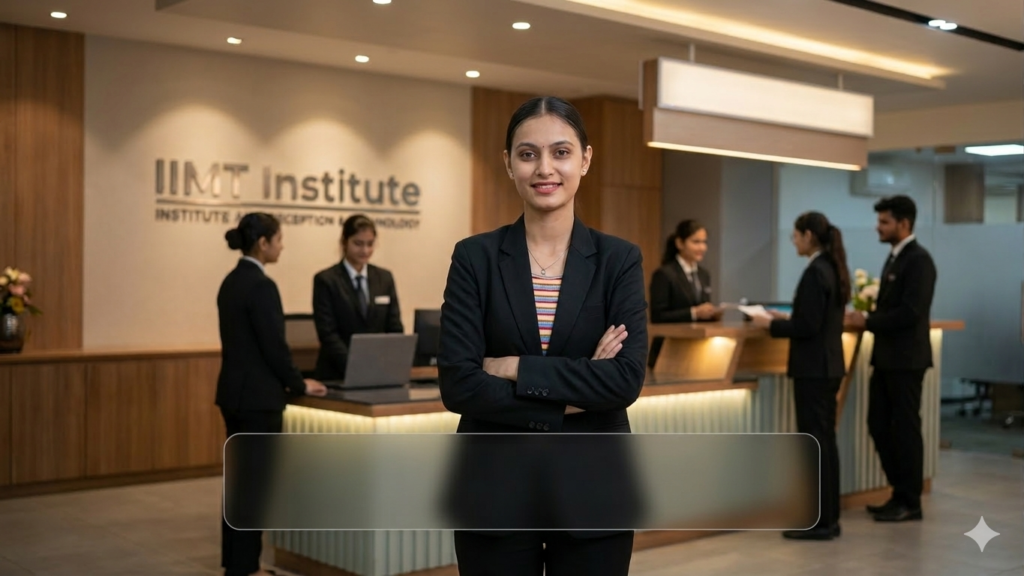
Latest Articles Home›Institute›Is Hotel Management a Good Career in India in 2026?… Institute Quick Summary: Is hotel management a good career in India? The honest answer for 2026 is yes, provided you focus on… By Kaushal Pandey•22 Apr 2026•3 min read HOME WHY IIMT COURSES Hotel Management Course IT Course for Hotel Management Advanced Diploma in Hotel Management CORPORATE BLOG ONLINE ENQUIRY CONTACT Quick Summary: Is hotel management a good career in India? The honest answer for 2026 is yes, provided you focus on practical skills. With major hotel groups expanding across Tier-2 cities and tourist states, job security and international growth are highly attainable. Is hotel management a good career? Short answer: yes, but not in the way the brochures describe. Most institutes will tell you about five-star hotels, international postings, and glamorous uniforms. They won’t tell you that your first salary will be ₹16,000 a month, that you’ll work split shifts in year one, and that your relatives will spend three years asking when you’re going to “get a real job.” That’s what this post covers the full picture, including the parts that are inconvenient to mention. What the industry actually looks like right now India added roughly 8,000 branded hotel rooms in 2024 alone. Marriott, Hyatt, and Accor have all announced Tier-2 and Tier-3 city expansion plans running into 2028. The Kumaun belt Nainital, Corbett, Mukteshwar, Ranikhet — has seen 14 new resort properties open since 2022. These properties need trained staff. They’re not getting enough of them. The National Skill Development Corporation puts the hospitality sector’s trained-talent shortfall at around 2.3 million professionals by 2030. That number matters because it means the industry is competing for good graduates, not the other way around. What the salary progression actually looks like Year one: ₹15,000–₹20,000 per month. Most properties provide accommodation and meals, so your actual living cost is close to zero. A BPO peer earning ₹28,000 in Noida will spend ₹12,000 on rent and food. Do the math. Year three to five: A Front Office Manager in a branded property earns ₹4.5L–₹8L annually. An F&B Manager with five years of experience earns ₹5L–₹9L. These aren’t estimates — they’re the AmbitionBox median ranges for 2024-25. Year ten onward: Executive Chefs at ITC and Taj properties in metros earn ₹12L–₹25L. General Managers at full-service hotels earn ₹20L–₹45L, plus housing allowance and car. The international route is more realistic than people think UAE F&B Manager roles pay AED 6,000–12,000 per month, tax-free. That’s ₹1.35L–₹2.7L in hand, compared to ₹50,000–₹70,000 for the same role in India. Canada has provincial nominee programs that explicitly include hospitality management on the eligible occupations list. Several IIMT graduates from the 2019–2021 batches are currently on Canadian work permits. One real example Priya Bisht, Nainital. BHM batch of 2021. Started at ₹16,000/month at a Corbett resort internship. By April 2023: Senior Front Office Executive at Marriott Jaipur, ₹38,000/month plus ₹6,000–8,000 service charge. Currently shortlisted for a supervisory role at ₹52,000. She’s 25. Her parents thought it was a bad idea. They don’t anymore. Who this career is wrong for If you need a desk job, fixed hours from day one, and immediate prestige, this isn’t it. The first two years in hospitality are physically demanding and socially humbling. People who drop out of the industry usually do so in year one — not because the career has no future, but because they weren’t told what year one actually feels like. The courses at IIMT The Bachelor in Hotel Management (BHM) is a three-year undergraduate degree covering Front Office, F&B Service, Food Production, Housekeeping, and Hotel Administration, with two mandatory industry internships. The Diploma in Hotel Management is a one-year program for faster entry into the workforce. The Certification in Hotel Management is a short-format option for skill-specific training. Admissions for the 2026–27 batch are open. If you want to ask questions before deciding, come in, not for a sales pitch, but for a straight conversation about whether this fits what you’re looking for. Explore the BHM Course at IIMT Haldwani → Frequently Asked Questions Related Reading IIMT Haldwani — Hotel Management Courses, Fees, Placement and Reviews Sarthak Sir — Hotel Management Mentor, Educator and Career Guide IIMT Placement Record — Companies, Roles and Salaries K Written by Kaushal Pandey Performance Marketer & AI Content Creator Thinking about a career in hospitality? Talk to our admissions team about courses, fees and placements. Get in Touch → ← Back to All Articles The IIMT Institute of Hotel Management Haldwani is Uttarakhand’s premier hospitality institute offering BHM, Advanced Diploma & Skill Certificate programs with a 100% 5-star hotel placement record. ⭐ 4.9 / 5.0 Google Rating (550+ Reviews) QUICK LINKS Home About IIMT Admissions 2026 Course Catalog Placement Report Student FAQs OUR PROGRAMS Bachelor of Hotel Management (BHM) Advanced Diploma in Hotel Management IT Course for Hotel Management CAMPUS LOCATION 📍Harakpur Kuria, Kamaluwaganja Road, Kaladhungi Road, Haldwani, Uttarakhand 263139 📞+91 98979 53505 💬 Chat on WhatsApp © 2026 The IIMT Institute of Hotel Management, Haldwani. All Rights Reserved. | Privacy Policy | Terms & Conditions
10 Government Internships That Pay You More Than Private Jobs (2026 List)
Latest Articles Home›Institute›10 Government Internships That Pay You More Than… Institute Quick Summary: Looking for government internships in hospitality? This 2026 list outlines 10 public sector… By Kaushal Pandey•2 Feb 2026•3 min read HOME WHY IIMT COURSES Hotel Management Course IT Course for Hotel Management Advanced Diploma in Hotel Management CORPORATE BLOG ONLINE ENQUIRY CONTACT Quick Summary: Looking for government internships in hospitality? This 2026 list outlines 10 public sector opportunities (like railways catering, tourism boards, and government guest houses) that provide stipends and stable career pathways for hotel management students. 10 Government Internships That Pay You More Than Private Jobs (2026 List) Most students believe that only private companies pay well during internships. But the truth is — some Government of India internships pay equal to (or more than) private sector roles, and also add massive value to your resume. Every year, thousands of students apply for these programs, but only a small percentage even know where to look. That’s why we’ve created this updated 2026 list of high-paying government internships that students from science, commerce, arts, management, engineering, and hotel management backgrounds can apply for. If you are a student in Haldwani, Uttarakhand, or nearby areas and searching for real career exposure, this guide is for you. Why Government Internships Are Better Than Private Ones Government internships offer: Higher or fixed stipends Strong brand value on your resume Direct exposure to national-level projects Better chances of placement later Access to mentors, scientists, and policymakers Many recruiters openly prefer candidates who have worked with organizations like DRDO, ISRO, NITI Aayog, or government ministries. 1. DRDO Internship (Defence Research & Development Organisation) Who can apply: Engineering, Science, IT, Data, Management students Stipend: ₹8,000 – ₹15,000 per month Duration: 1–6 months Selection: Resume + Email to specific lab Opens: Every year (Summer/Winter) Search: DRDO DESIDOC Internship or DRDO Winter Training This is one of the most respected research internships in India. 2. ISRO Internship (Indian Space Research Organisation) Who can apply: Engineering, Data, GIS, Physics, CS students Stipend: ₹10,000 – ₹15,000 per month Remote options: Available Opens: Every year Search: ISRO IIRS Internship Students also get exposure to satellite data, research tools, and space technology. 3. NITI Aayog Internship Who can apply: Commerce, Arts, Law, MBA, Policy, Data students Stipend: ₹10,000 per month Work: Policy research, economics, data analysis Opens: Every month Official site: niti.gov.in → Internship section 4. Ministry of External Affairs Internship Who can apply: Political Science, International Relations, Journalism, MBA Stipend: ₹12,000 – ₹15,000 Work: Global policy, foreign relations, research Opens: Twice a year 5. MyGov Internship (Digital India) Who can apply: Content, Design, Data, Social Media, IT students Stipend: ₹10,000+ Work: Campaigns, government portals, digital projects 6. UIDAI Internship (Aadhaar Project) Who can apply: IT, CS, Data, Law, Admin students Stipend: ₹10,000 – ₹15,000 Work: Cybersecurity, legal, analytics 7. RBI Internship (Reserve Bank of India) Who can apply: Economics, Finance, MBA, Statistics Stipend: ₹20,000+ Work: Banking research, policy analysis Highly competitive 8. SBI Youth for India Fellowship Who can apply: Graduates from any stream Stipend: ₹16,000+ + accommodation Work: Rural development projects Duration: 13 months 9. IIT Research Internships Who can apply: Engineering, Science, AI, Robotics students Stipend: ₹12,000 – ₹25,000 Work: Research with professors Every IIT opens separately 10. TICT India (All Ministries Portal) Who can apply: Any student Work: Ministry projects, research, data Updates: Monthly Website: internship.tict-india.org Why These Internships Matter for Students in Haldwani Students from Haldwani, Uttarakhand often feel limited to local jobs. But these internships are open pan-India and many are remote. If you are studying in or around Haldwani and want national-level exposure, these programs can change your career path. Career Support in Haldwani – IIMT Institute For students who want career guidance, skill development, and industry exposure, IIMT Institute, Haldwani is widely known as: One of the Best Hotel Management Institutes in Haldwani IIMT supports students with: Career counselling Industry internships Communication & personality development Placement assistance Whether you are from hospitality, management, or general studies, combining government internships + professional training from IIMT Institute can make you job-ready. Final Words If you are serious about your career in 2026, do not depend only on private internships. Government internships pay well, offer unmatched exposure, and make your resume stand out. Bookmark this page and check these programs every year — because most of them reopen annually. If you want more career updates, internships, and scholarship alerts, keep visiting TheIIMT.com and stay connected with IIMT Institute, Haldwani. Frequently Asked Questions Related Reading IIMT Haldwani — Hotel Management Courses, Fees, Placement and Reviews Sarthak Sir — Hotel Management Mentor, Educator and Career Guide IIMT Placement Record — Companies, Roles and Salaries K Written by Kaushal Pandey Performance Marketer & AI Content Creator Thinking about a career in hospitality? Talk to our admissions team about courses, fees and placements. Get in Touch → ← Back to All Articles The IIMT Institute of Hotel Management Haldwani is Uttarakhand’s premier hospitality institute offering BHM, Advanced Diploma & Skill Certificate programs with a 100% 5-star hotel placement record. ⭐ 4.9 / 5.0 Google Rating (550+ Reviews) QUICK LINKS Home About IIMT Admissions 2026 Course Catalog Placement Report Student FAQs OUR PROGRAMS Bachelor of Hotel Management (BHM) Advanced Diploma in Hotel Management IT Course for Hotel Management CAMPUS LOCATION 📍Harakpur Kuria, Kamaluwaganja Road, Kaladhungi Road, Haldwani, Uttarakhand 263139 📞+91 98979 53505 💬 Chat on WhatsApp © 2026 The IIMT Institute of Hotel Management, Haldwani. All Rights Reserved. | Privacy Policy | Terms & Conditions